- Suggestions
- Tarifario
-
-
Make an appointment


Bienvenido
Elige con que asesor deseas chatear y te atenderá con mucho gusto.

Peru exported legumes showed a drop of 2.5% in 2023
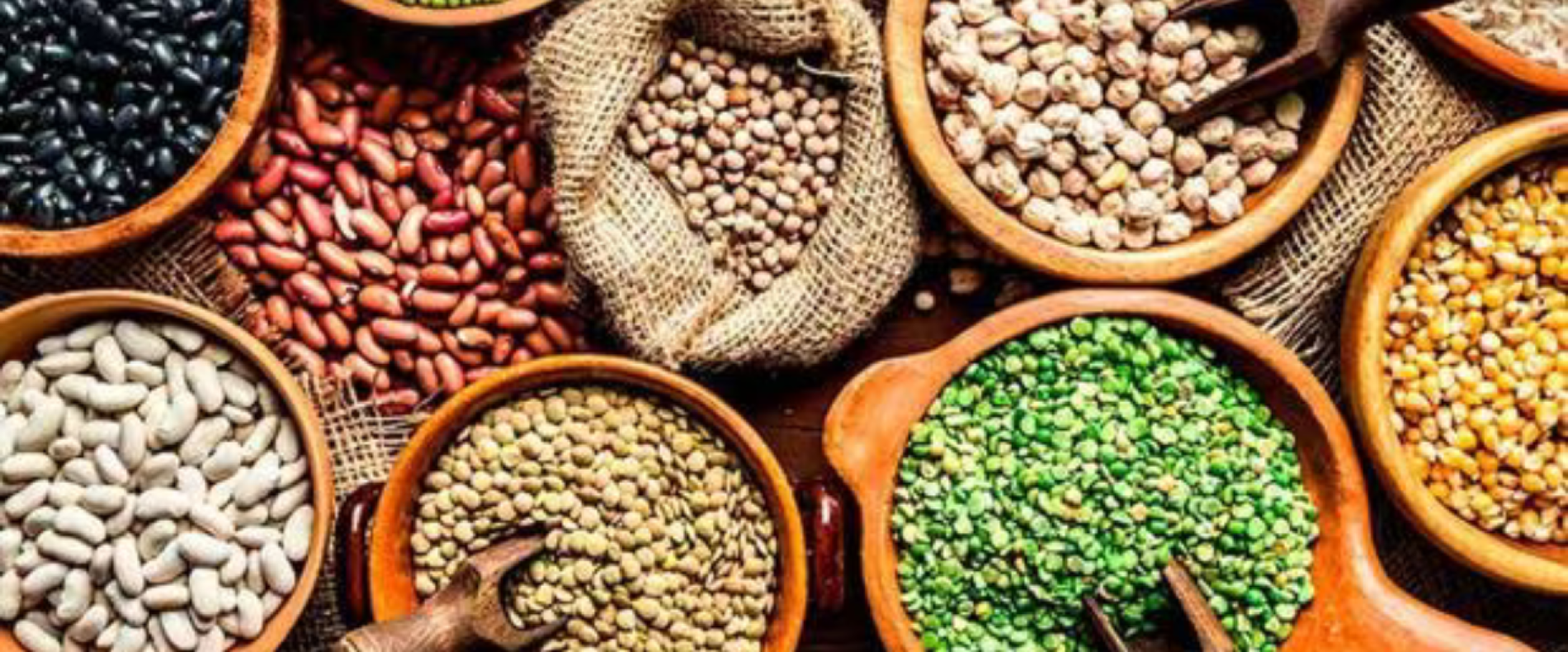
The export of Peruvian legumes totaled just over US$ 135 million in 2023, which represented a slight drop of 2.5% compared to 2022, when the figure exceeded US$ 139 million, reported the president of the Committee of Menestras and other Grains from the Association of Exporters (ADEX), Jorge Fernández Gil.
It was during his presentation 'Menestras: Global Perspectives on the Legume Trade', held at the virtual conference 'Menestras: nourishing soils and people', organized by the Ministry of Agrarian Development and Irrigation of Peru (Midagri), in the framework of World Pulses Day which is celebrated on February 10 every year.
Fernández Gil pointed out that there is pending work between the public and private sectors in order to take advantage of existing opportunities. He mentioned the case of the Castilla bean in the European Union, which in recent years established a series of regulations to allow its entry and that of other products.
“It is a crop whose shipments decreased due to the presence of pesticides and heavy metals, typical of the land, but it has potential. As the ADEX Menestras Committee we are willing to collaborate and develop joint actions,” he commented.
He also referred to tarwi, characterized by its nutritional properties and whose consumption occurs mainly in the Andean zone of the country.
“It is expensive if compared to the Chilean tarwi, but it has opportunities in the segment of consumers who take care of their diet. It is important to promote its production and consumption,” he noted.
Varieties
According to the ADEX Agro-Export Management, the Peruvian legume with the most demand in 2023 was pigeon pea, adding US$ 37 million, although it showed a slight contraction of 16.9%, compared to 2022 (US$ 44 million 602 thousand). In second place was the pea with US$ 29 million (-14%).
Others were the Chinese bean (loctao) with sales of US$ 22 million, the pallar (US$ 20 million), the castile bean (US$ 8 million), broad beans (US$ 7 million 900 thousand) and the common bean ( US$ 4 million 664 thousand). Peru also exported canary beans, adzuki beans, tarwi, zarandaja, panamito, red beans, black beans, lentils, knight beans and round beans.
Markets
The main destination in the period analyzed was the US with US$ 47 million 531 thousand, registering a drop of 16.7%. South Korea followed with US$28 million (change of 109%), thanks to its greater demand for Chinese beans (loctao).
The Dominican Republic, United Kingdom, Netherlands, Colombia, Puerto Rico, Spain, Panama, Canada, Japan, Ecuador, Turkey, France, Chile, France, among others, were also placed in the ranking.
Procesadora Mejía S.A.C. leads legume exporting companies. It is followed by Fair Fruit Perú S.A.C., V&F S.A.C, Servicios Procesados Perú S.A.C., Intipa Foods S.A.C., Andes Alimentos & Bebidas S.A.C., Brolem Company S.A.C., FRG Farms S.A.C., Interloom S.A.C. and Agro Fergi S.A.C.
Source: El Comercio Peru
Related news

Mincetur: Peruvian exports exceed US$33 billion between January and May and are on track to reach a historic record in 2025.
Mincetur: Peruvian exports exceed US$33 billion between January and May and are on track to reach a historic record in 2025.

MEF: Double taxation agreement boosted Brazilian investment in Peru

Peru will build its first artificial peninsula in Callao: investment amounts to more than US$760 million and will have these innovative spaces
Peru will build its first artificial peninsula in Callao: investment amounts to more than US$760 million and will have these innovative spaces

Port congestion in northern Europe spreads to the US and China