- Suggestions
- Tarifario
-
-
Make an appointment


Bienvenido
Elige con que asesor deseas chatear y te atenderá con mucho gusto.

CARGO HANDLING AT PUBLIC TERMINALS TO EXCEED 63.7 MILLION TONS IN 2024
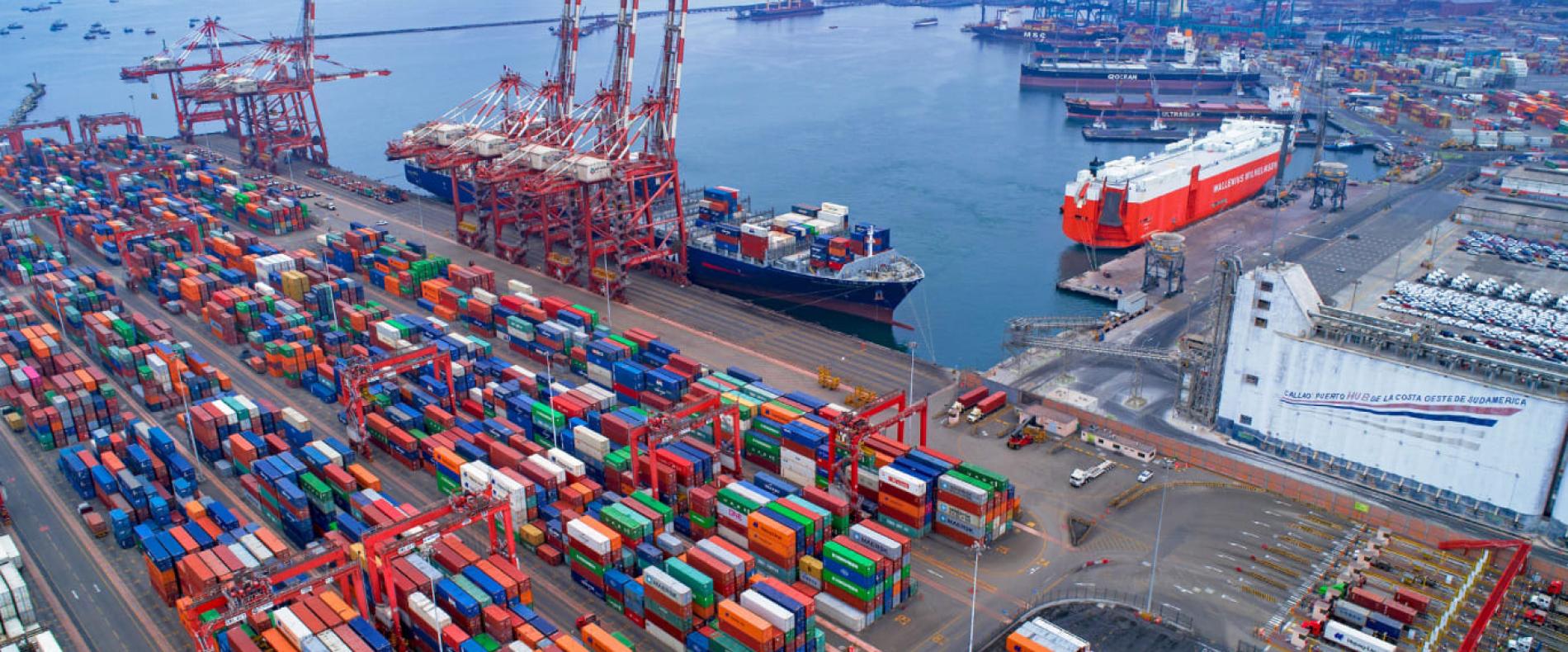
The Peruvian port system reached record figures in 2024, reflecting the impact of private investment, infrastructure modernization, and management by the National Port Authority (APN). With a constantly evolving infrastructure in this sector, Peru would be on track to strengthen its position as a logistics hub in South America.
Since its creation in 2003, the National Port Authority (APN) has been a key player in the modernization and competitiveness of the port sector in Peru. As a specialized technical body attached to the Ministry of Transport and Communications (MTC), its management has promoted private investment in infrastructure, which has allowed for greater operational capacity and logistical efficiency in public-use terminals.
At that time, the country had 24 port terminals (20 maritime and 4 river) that handled approximately 700,000 containers and 48.8 million metric tons of cargo. Currently, the port infrastructure has grown significantly to reach 63 terminals (48 maritime, 14 river and 1 pier), of which 8 have been granted under the public-private partnership (PPP) model. This development has been decisive in boosting the sector, which is reflected in the increase in cargo movement. In 2024, the National Port System mobilized more than 127.8 million tons, which represented an 8.4% growth compared to the previous year, according to APN figures.
The Port of Callao has established itself as the country's main logistics hub, with a movement of 44.1 million metric tons in 2024. Within this, the Terminal de Contenedores Zona Sur was the leader, with 21.5 million tons (+22.3%), followed by the Terminal Norte Multipropósito, with 19.6 million tons (+8.7%), and the Matarani Port Terminal, with 8.2 million tons (+8.8%). As for public-use terminals, the volume mobilized reached 63.7 million tons, 14.5% more than in 2023. This increase responds to sustained investment in port infrastructure and the optimization of logistics processes.
The movement of containerized cargo also set a record in 2024, with 3.5 million TEUs mobilized, 11.4% more than the previous year. In this segment, the port of Callao accounted for 88% of the total, with the South Zone Container Terminal, operated by DP World Callao, standing out with more than 1.9 million TEU, followed by the Multipurpose North Terminal, operated by APM Terminals, with 1.1 million TEU, and the Paita Port Terminal, with 309,180 TEU. Likewise, the port of Paracas registered a year-on-year growth of 174.4%, the highest among the terminals on the Peruvian coast, as it reached 77,500 TEU mobilized.
The ports on the Peruvian coast, both public and private, continue to play an essential role in the export of key resources. During 2024, the main exported products included iron ores and concentrates (23.1 million MT), copper ores and concentrates (9.6 million MT), calcium phosphate (4.8 million MT), liquefied natural gas (3.9 million MT) and zinc concentrates (1.8 million MT). Altogether, mining products accounted for 63.1% of the total exported. On the other hand, agricultural and fishing exports reached 6.7% and 2.4%, with 3.99 million MT and 1.4 million MT, respectively, reflecting their importance within Peruvian foreign trade, according to Sunat figures.
The development of the port sector has been largely driven by private investment. In 2024, US$165.9 million were allocated to port infrastructure, with a cumulative total of US$2,269 million, which is equivalent to 66% of the investment commitment of the concessioned terminals, according to Ositrán. These resources have been key to modernizing ports and improving the efficiency of foreign trade.
In this context, the inauguration of the first stage of the Chancay port, in November 2024, constitutes an important milestone. Its entry into operation at the beginning of June of this year would strengthen connectivity with international markets and consolidate Peru's position as a logistics hub in South America. In addition, the approval of the Maritime Cabotage Law, which allows foreign and national companies to offer cabotage services without having to be incorporated in the country, would represent an opportunity to further boost the sector, although regulatory aspects remain to be resolved (see Weekly 1232).
This progress in the port system reflects the APN's ongoing efforts to modernize infrastructure and promote logistics efficiency. Investment in concessioned terminals and policies aimed at strengthening the competitiveness of the sector ensure a positive trend in foreign trade, which benefits economic development in various sectors.
Source: ComexPeru
Related news

Mincetur: Peruvian exports exceed US$33 billion between January and May and are on track to reach a historic record in 2025.
Mincetur: Peruvian exports exceed US$33 billion between January and May and are on track to reach a historic record in 2025.

MEF: Double taxation agreement boosted Brazilian investment in Peru

Peru will build its first artificial peninsula in Callao: investment amounts to more than US$760 million and will have these innovative spaces
Peru will build its first artificial peninsula in Callao: investment amounts to more than US$760 million and will have these innovative spaces

Port congestion in northern Europe spreads to the US and China