- Suggestions
- Tarifario
-
-
Make an appointment


Bienvenido
Elige con que asesor deseas chatear y te atenderá con mucho gusto.

Commercial changes in Argentina boost Peruvian shipments, of what products?
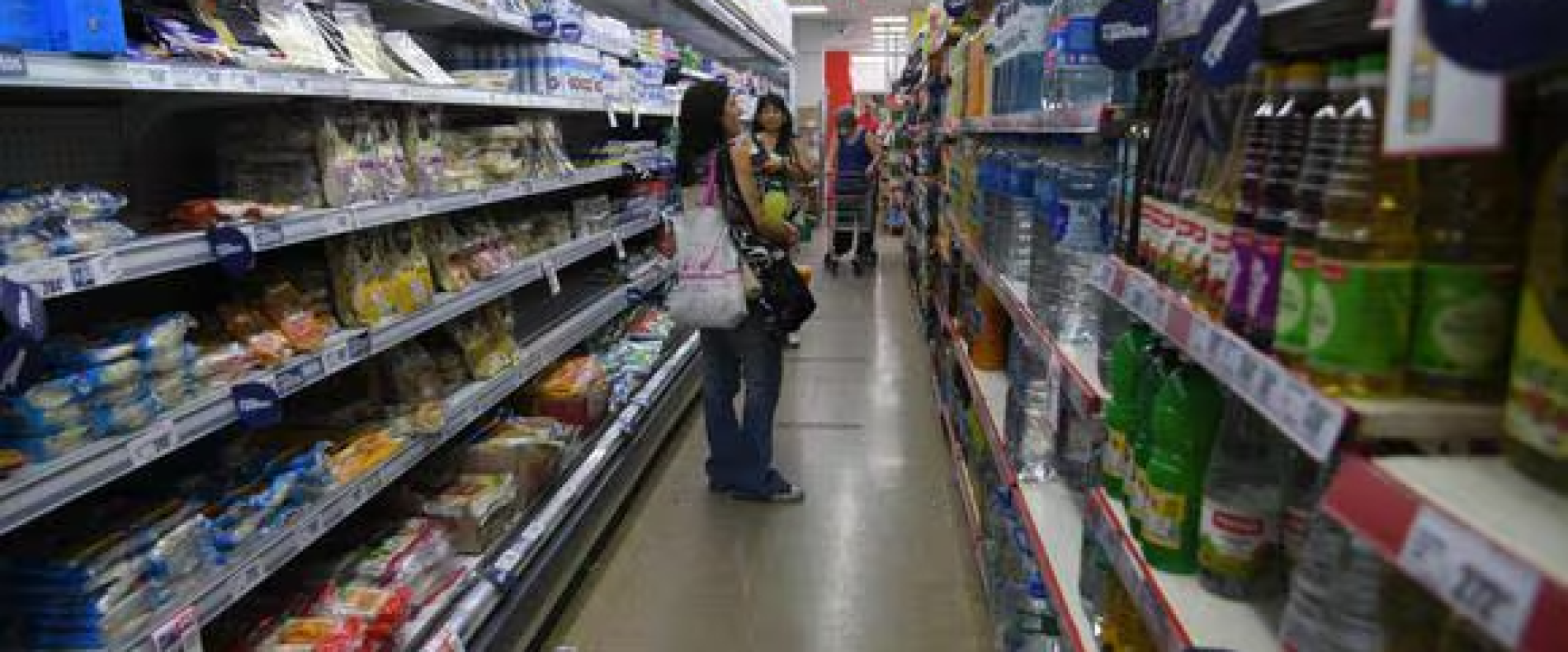
In the midst of an inflationary crisis, the Government of Argentina began to show signs of trade opening by unblocking import processes, which could be beneficial for Peruvian exports, indicates a recent report from the Foreign Trade Society of Peru ( ComexPeru).
At the end of 2023, Joint Resolution 5466/23 of the Ministry of Commerce and the Federal Public Revenue Administration (AFIP) was published, which modified the Import System of the Argentine Republic (SIRA), eliminating import permits that established a process of up to 60 days to give authorization.
After this, on March 18, a resolution was promulgated that suspends for 120 days the collection of income tax and value added tax (VAT) for 3,564 tariff items that belong to various categories of the basic basket. , including food, drinks, toiletries, insecticides and medicines.
In addition, the Central Bank of the Argentine Republic (BCRA) reduced the payment period for imported products from 120 days, which governed in terms of 4 installments, to only 30 days. With these measures, they seek to generate price competition in the face of a greater supply of foreign products.
What impact would it have in Peru?
Although non-traditional exports from Peru to Argentina last year were 9.4% lower than in 2022, amounting to only US$ 173 million, ComexPerú indicates that, taking into account the new conditions and the list of benefited items, there are Peruvian products that have the potential to be exported to the neighboring country, but that are not yet part of what is sent.
"Given this scenario, it would become attractive for the Peruvian export sector to venture into some products, including fresh oranges, canned tuna, washing preparations (detergents), shampoos and toothpaste," they indicate.
Data from the International Trade Center (ITC) show that in 2023, Argentina purchased fresh oranges from abroad, worth US$ 2.9 million (104%); canned tuna, for US$ 86.7 million (0.3%); detergent, worth US$ 105 million (1%); shampoos, for US$ 41.3 million (1.5%); and toothpastes, US$ 28.5 million (42.1%).
ComexPerú indicates that Peru's participation in the export market to Argentina could also be improved with greater shipments of cocoa powder, fresh avocados, frozen squid and squid, and toilet paper.
It is worth mentioning that, according to the ITC, last year Argentina imported cocoa powder for US$ 61.7 million (15.9%), fresh avocados for US$ 57.2 million (1.9%), frozen squid and squid for US$ 1.7 million (-43.09 %), and toilet paper for US$ 12.2 million (32%).
The union remembers that Peru has an Economic Complementation Agreement with Mercosur, of which Argentina is a part, so all our products have tariff preferences, which means that they do not pay tariffs at destination and competitive prices are generated for consumers.
Source: GESTIÓN NEWSPAPER
Related news

Mincetur: Peruvian exports exceed US$33 billion between January and May and are on track to reach a historic record in 2025.
Mincetur: Peruvian exports exceed US$33 billion between January and May and are on track to reach a historic record in 2025.

MEF: Double taxation agreement boosted Brazilian investment in Peru

Peru will build its first artificial peninsula in Callao: investment amounts to more than US$760 million and will have these innovative spaces
Peru will build its first artificial peninsula in Callao: investment amounts to more than US$760 million and will have these innovative spaces

Port congestion in northern Europe spreads to the US and China